
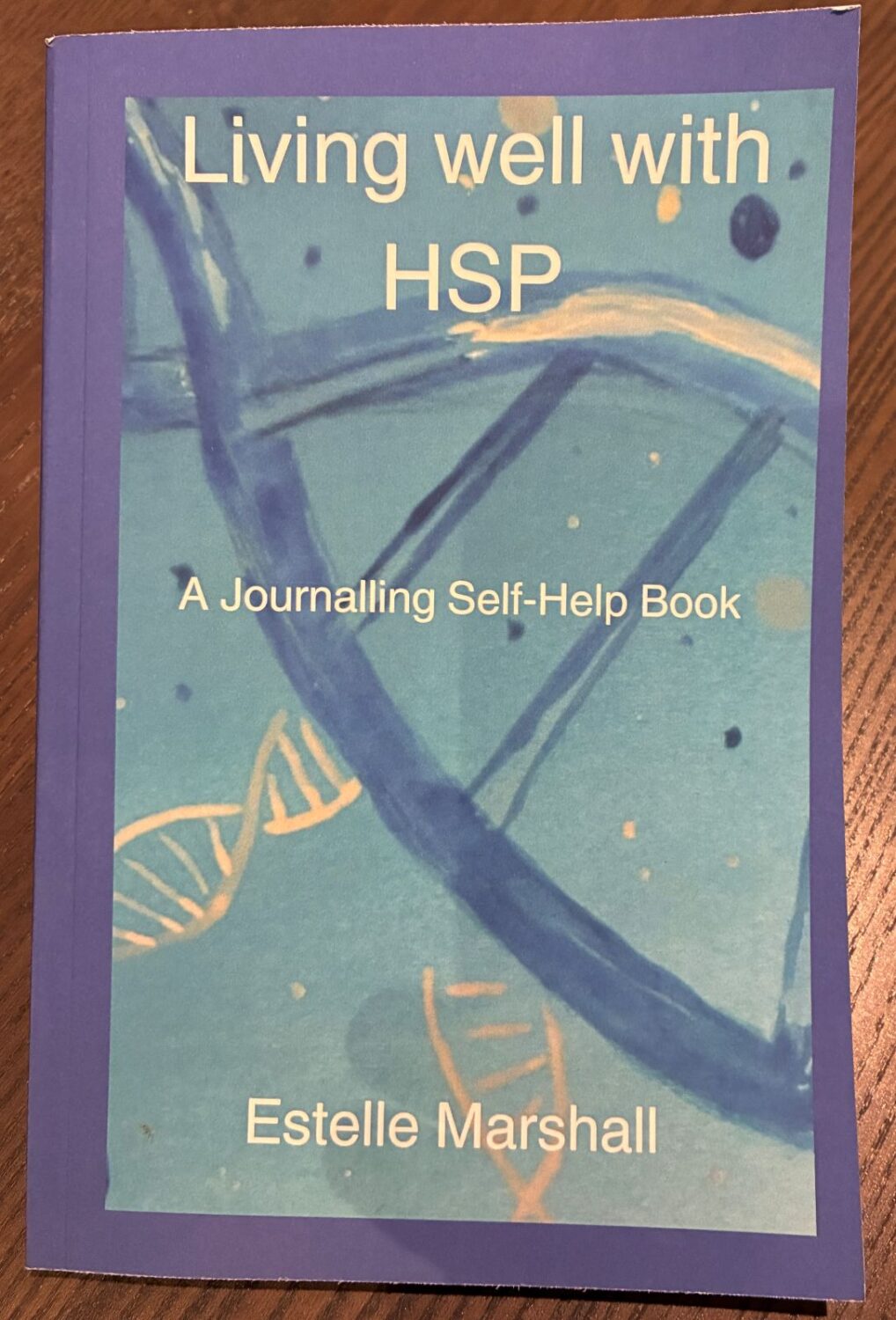
There is a new book available for people with HSP. The book has been written by Estelle Marshall, one of our members, who is also a retired physiotherapist. The book has a great overview of the main elements of HSP, and gives you space to write in answers to questions that it asks. This post gives an overview of the chapters of the book, allowing you to get an idea of content before buying.
Having read the book, I conclude that it has lot to offer people. It asks questions to help you think about yourself, and gives positive steps towards accepting and managing your HSP. You can buy the book on Amazon:
https://www.amazon.co.uk/Living-well-Hereditary-Spastic-Paraplegia/dp/B0GQP1C4RH
Chapter 1 – What is HSP
This chapter gives an overview of HSP by exploring each of the three words hereditary, spastic and paraplegia. It discusses the different ways that HSP can be inherited, covers the most common symptoms for HSP, giving information about:
- Spasticity
- Fatigue
- Pain
- Paraplegia
- Foot drop
- Bladder/bowel problems
For each it gives an overview of the issue, an overview of treatment options and asks you questions to help you understand more about yourself. It also gives a brief overview for some of the rarer HSP symptoms: Sexual problems, Neuropathy, Epilepsy, Ataxia, Speech problems and Swallowing problems.
Chapter 2 – The impact of diagnosis
This chapter talks about the grief process and approaches for relaxation, and some of the benefits that a support group can offer
Chapter 3 – Exercise
Exercise is one of the most important things which you can do to help manage your HSP. Estelle covers some of the barriers to exercise, and goes into the main types of exercise that are useful for HSP.
Details of stretches are given, giving pictures of examples for stretching calf and hip muscles, which are often affected by HSP. Information is also given on balance exercises, strengthening exercises, cardiovascular exercises, exercise classes and pelvic floor exercises. In each case you have the chance to find out more and identify where you could make a change. Some avenues to finding classes are given.
Chapter 4 – Falls
This chapter talks about why HSP can make put you at a higher risk of falls, and goes through some approaches for falls prevention, including: Mobility aids, your environment, footwear and exercise.
This chapter also gives an overview of the different healthcare professionals you may see: physiotherapist, occupational therapist (OT), orthotist, neurologist, speech and language therapist (SALT), and podiatrist.
Chapter 5 – Healthy Lifestyle
This chapter covers some areas you could explore to improve your lifestyle, including: exercise, diet, sleep, alcohol and smoking.
Chapter 6 – Quality of Life
This chapter gives ideas for areas you may want to explore to improve your quality of life, including: exercise, relationships, laughter, your environment, gardening, practicing gratitude, planning and having fun.
Chapter 7 – Self Management and Goals
The last chapter in the book gives some questions to explore how you manage yourself, and approaches for setting goals.